-
Keshav Kripa Polyplast
- August 21, 2026
- No Comments
Author’s Note:
This guide is written for contractors, infrastructure professionals, electrical and telecom project teams, builders, farmers, and buyers researching DWC HDPE pipes in India. Specifications, sizes, and prices can vary according to the applicable BIS standard, pipe class, diameter, quantity, manufacturer, location, transportation, and project requirements. Always verify the latest technical datasheet and quotation before procurement.
Table of Contents
- What Are DWC HDPE Pipes?
- Uses and Key Benefits
- Common Sizes and Specifications
- DWC HDPE Pipe Price Guide in India
- How to Choose the Right DWC Pipe
- FAQs
What Are DWC HDPE Pipes?
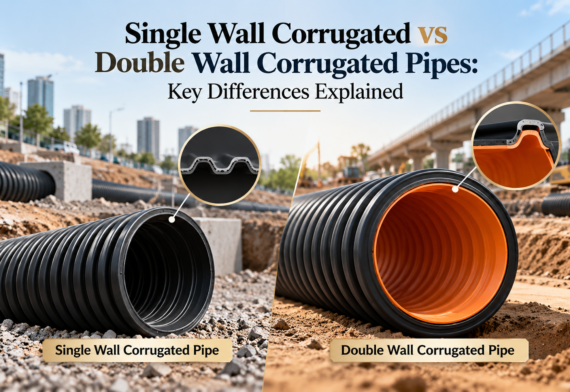
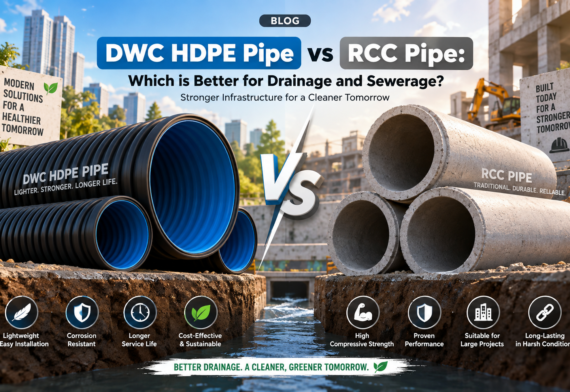
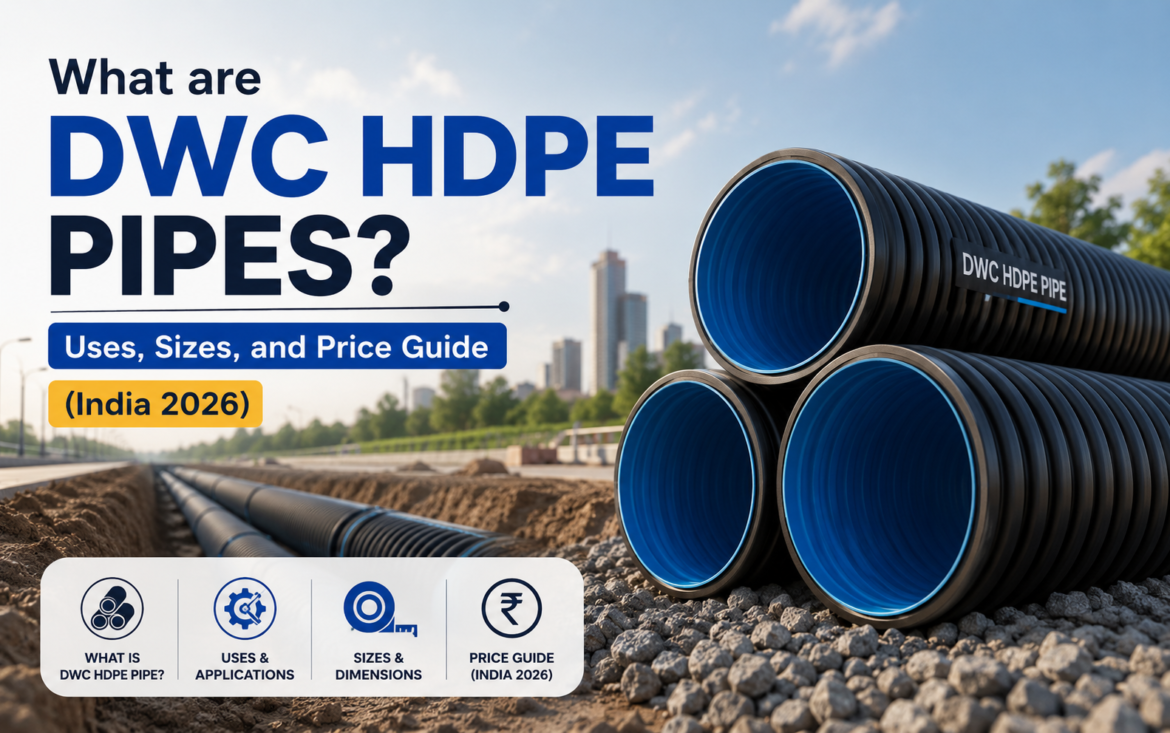
DWC stands for Double Wall Corrugated. DWC HDPE pipes are structured-wall polyethylene pipes designed with a corrugated outer wall and a comparatively smooth inner wall. The outer profile provides high resistance to external loads, while the smooth internal surface supports easier cable installation or efficient drainage flow, depending on the application.
These pipes are commonly used for underground cable protection, telecom and optical-fibre networks, electrical infrastructure, drainage, sewerage, stormwater management, and other utility projects. Different applications require different standards. For example, DWC pipes used for cable ducting may follow IS 14930 or IS 16205, while larger structured-wall pipes for drainage and sewerage may be manufactured according to IS 16098 Part 2.
Unlike conventional rigid materials, HDPE offers a combination of flexibility, impact resistance, corrosion resistance, and comparatively low weight. This makes DWC systems practical for projects where transportation, installation, underground protection, and long-term performance are important considerations.
Uses and Key Benefits
DWC pipes are particularly suitable for underground infrastructure because their corrugated external structure helps withstand soil and external loading. Their smooth internal wall also makes cable pulling or drainage movement easier.
Major applications include:
- Optical-fibre and telecom cable protection
- Electrical and power cable ducting
- Railway and highway utility infrastructure
- Stormwater drainage
- Sewerage and non-pressure drainage
- Industrial utility networks
- Underground communication systems
Manufacturers commonly highlight lightweight construction, chemical resistance, impact strength, flexibility, and ease of installation as important advantages.
For buyers comparing different polyethylene pipe categories, hdpe pipe in India can refer to several products, including pressure pipes, irrigation pipes, ducts, and structured-wall systems. Therefore, selecting a pipe only by material is not enough; the application, standard, diameter, stiffness or pressure requirement, and installation conditions should also be checked.
Common Sizes and Specifications
DWC pipe sizes depend heavily on their intended application. Cable-ducting products are available in smaller diameters, while drainage and sewerage applications can require significantly larger internal diameters.
For example, manufacturers list cable-ducting ranges such as 40/32 mm, 50/38 mm, 63/51 mm, 75/61 mm, 90/75 mm, 110/95 mm, 160/135 mm, 200/170 mm, and 225/200 mm. Drainage-oriented DWC systems can extend from around 75 mm to 600 mm or more, depending on the manufacturer and standard.
| Application | Typical Size Range | Important Consideration |
|---|---|---|
| Telecom/Cable Ducting | Approx. 40–225 mm | Cable diameter and installation method |
| Electrical Ducting | Approx. 40–315 mm | Cable protection and load conditions |
| Drainage/Sewerage | Approx. 75–1000 mm ID | Flow, depth, soil and stiffness class |
| Large Infrastructure | Project-specific | Design load and applicable standard |
A buyer should confirm whether a quoted dimension represents the outside diameter or internal diameter. This distinction is particularly important when comparing quotations from different manufacturers.
DWC HDPE Pipe Price Guide in India 2026
There is no single fixed nationwide price for DWC HDPE pipes. Pricing changes with diameter, wall construction, stiffness class, raw-material prices, standard compliance, order quantity, transportation, fittings, and project location.
As a historical reference, an RDSO technical document listed prices for certain large DWC sizes, including approximately ₹724 per metre for 200 mm ID and ₹17,966 per metre for 1000 mm ID after freight to Delhi in the cited quotation. These figures are not current market quotations and should not be treated as 2026 retail prices.
For an accurate 2026 quotation, buyers should provide:
- Required diameter
- Required length
- Application
- Applicable BIS/technical standard
- Required stiffness or pressure class
- Quantity
- Delivery location
- Required fittings and accessories
When comparing hdpe pipe manufacturers, it is better to evaluate technical compliance, testing, material quality, consistency, documentation, delivery capability, and after-sales support rather than selecting solely on the lowest quoted price.
How to Choose the Right DWC Pipe
Start by identifying the exact application. A cable ducting project and a drainage project should not automatically use the same DWC specification.
For telecom and electrical projects, check cable capacity, bending radius, pulling/blowing requirements, jointing system, and applicable standards. For drainage applications, consider internal diameter, flow requirements, burial depth, soil conditions, traffic loading, and stiffness class.
Also compare the manufacturer’s technical datasheet and certification documents. Products marketed under terms such as dwc pipe in India, sprinkler pipe in india, or mdpe pipe in india may serve completely different applications, so product terminology should not replace technical specification.
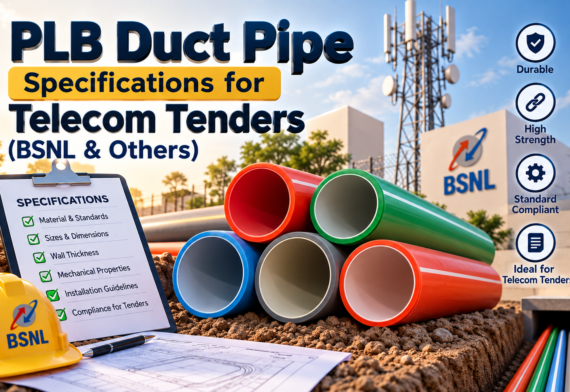
For telecom projects, PLB ducts are another specialised category designed for optical-fibre cable installation. Similarly, plb duct pipes in india should be evaluated according to their specific telecom requirements rather than compared directly with standard DWC drainage pipes.
Other product categories such as SWC Hdpe Pipes in india may also have different construction and application characteristics. The right selection ultimately depends on project design, applicable standards, installation conditions, and required service performance.
FAQs
1. What does DWC HDPE pipe mean?
DWC means Double Wall Corrugated. It generally has a corrugated outer wall for structural strength and a smooth inner wall for cable installation or fluid movement.
2. What are DWC pipes mainly used for?
They are widely used for underground telecom and electrical cable protection, optical-fibre ducting, drainage, sewerage, stormwater systems, and infrastructure projects.
3. What sizes are available in DWC HDPE pipes?
Sizes vary by application and manufacturer. Cable-ducting products can start around 40 mm, while drainage DWC systems can reach 1000 mm internal diameter or higher in specialised ranges.
4. Are DWC HDPE pipes expensive?
Their price depends on diameter, standard, stiffness class, quantity, raw-material cost, transportation, and project requirements. Large-diameter pipes generally cost considerably more per metre than smaller ducts.
5. Which DWC pipe should I buy?
Choose according to the application, required diameter, applicable BIS standard, load conditions, stiffness or pressure requirement, installation method, and manufacturer’s technical documentation. A project-specific quotation is preferable to selecting solely by price.