-
Keshav Kripa Polyplast
- November 17, 2026
- No Comments
Author’s Note: Effective stormwater drainage is essential for preventing urban flooding, protecting roads, and managing rainwater runoff. This guide explains why Double Wall Corrugated (DWC) HDPE pipes are increasingly considered for modern drainage infrastructure compared with traditional concrete pipes. The right choice depends on hydraulic design, soil conditions, traffic loads, installation quality, and project specifications. Engineers and contractors should always verify applicable standards before selecting a drainage system.
Table of Contents
- Understanding Stormwater Drainage Systems
- Why DWC HDPE Pipes Are Gaining Popularity
- DWC HDPE Pipes vs Concrete Pipes
- Factors to Consider Before Choosing Drainage Pipes
- Frequently Asked Questions
Understanding Stormwater Drainage Systems
Stormwater drainage systems collect and transport rainwater from roads, rooftops, parking areas, residential developments, and public spaces. Their main purpose is to prevent waterlogging, reduce surface runoff problems, and direct excess water towards designated drainage channels, retention facilities, or discharge points.
Traditional drainage networks have commonly used concrete pipes because of their structural strength and established construction practices. However, modern infrastructure projects increasingly evaluate alternative materials that can simplify transportation, handling, and installation.
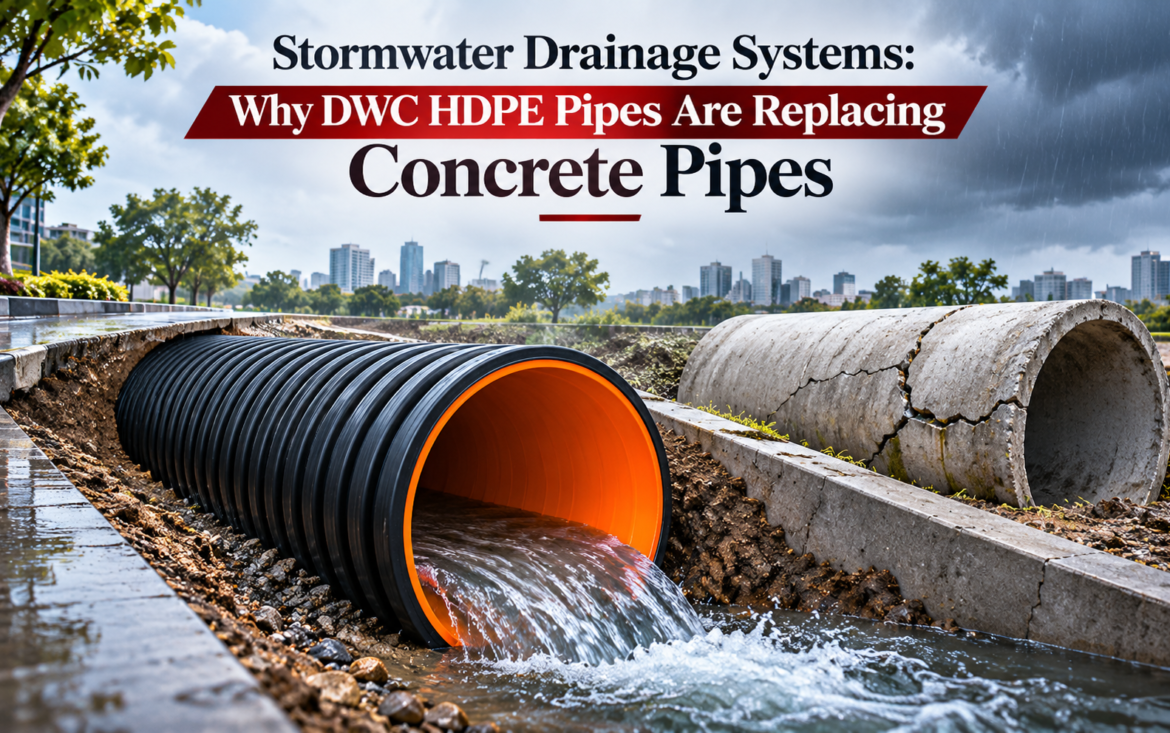
Double Wall Corrugated (DWC) HDPE pipes are one such option. They feature a corrugated outer wall for structural support and a relatively smooth inner wall to facilitate water flow. Their design makes them suitable for many underground drainage applications when selected according to the required loading and installation conditions.
Why DWC HDPE Pipes Are Gaining Popularity
Lightweight Construction and Faster Installation
One major advantage of DWC pipes is their comparatively lightweight construction. Concrete pipes can be heavy and may require cranes, specialised lifting equipment, and additional labour during transportation and installation.
DWC pipes are generally easier to transport, handle, and position. Depending on the diameter and site conditions, this can reduce installation effort and help contractors complete drainage work more efficiently.
Corrosion and Chemical Resistance
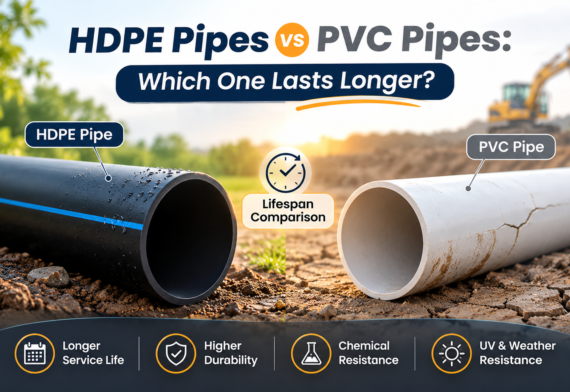
Concrete drainage pipes can be affected by aggressive soil conditions, chemical exposure, and certain wastewater environments. DWC HDPE pipes offer good resistance to corrosion and many commonly encountered chemicals.
This property can be beneficial in underground stormwater networks where moisture and varying soil conditions are present. However, chemical compatibility should always be checked against the actual material exposure.
Smooth Internal Surface for Water Flow
The smooth inner wall of a DWC pipe helps reduce flow resistance compared with a rougher internal surface. This can support efficient stormwater movement when the pipe diameter, slope, and hydraulic capacity are correctly designed.
A smooth interior can also help reduce the accumulation of sediment, although regular inspection and cleaning remain important parts of drainage maintenance.
DWC HDPE Pipes vs Concrete Pipes
Structural Performance and Installation Requirements
Concrete pipes are known for their high compressive strength and can be suitable for projects involving substantial external loads. Their performance depends on concrete grade, reinforcement where applicable, bedding, installation, and structural design.
DWC HDPE pipes offer a different structural approach. Their corrugated exterior provides ring stiffness, while the surrounding soil and correct installation contribute to the performance of the buried pipe system.
This means DWC pipes must be selected according to specified ring stiffness, burial depth, soil conditions, groundwater level, and traffic loading. They should not automatically be considered a replacement for concrete in every project.
Transportation, Jointing, and Overall Project Cost
Concrete pipes may involve higher transportation and handling requirements because of their weight. DWC pipes can offer logistical advantages, especially on sites where access is restricted or installation speed is important.
Suitable jointing systems can also help create secure connections and reduce the risk of leakage or soil infiltration when installed correctly.
For buyers comparing dwc pipe in India, it is important to evaluate the complete project cost, including excavation, bedding, transportation, labour, jointing, testing, and long-term maintenance rather than comparing only the purchase price.
Factors to Consider Before Choosing Drainage Pipes
Technical Specifications and Supplier Verification
Before selecting a drainage pipe, engineers should evaluate expected stormwater flow, pipe diameter, slope, ring stiffness, burial depth, soil conditions, and external loading. The selected product must meet the project’s hydraulic and structural requirements.
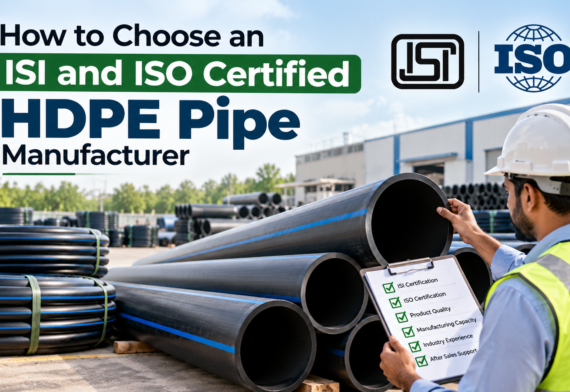
For buyers researching hdpe pipe in India, product specifications and relevant standards should be checked carefully. Reputable hdpe pipe manufacturers should provide technical datasheets, dimensional details, test reports, and installation recommendations.
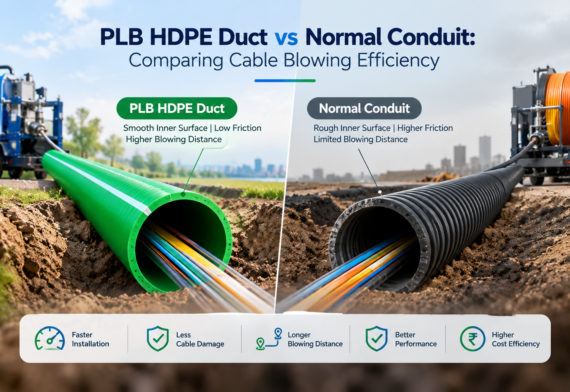
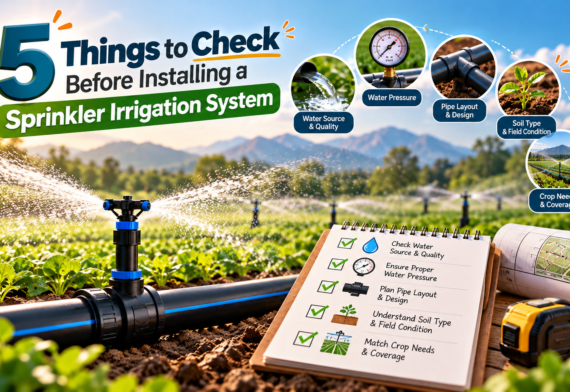
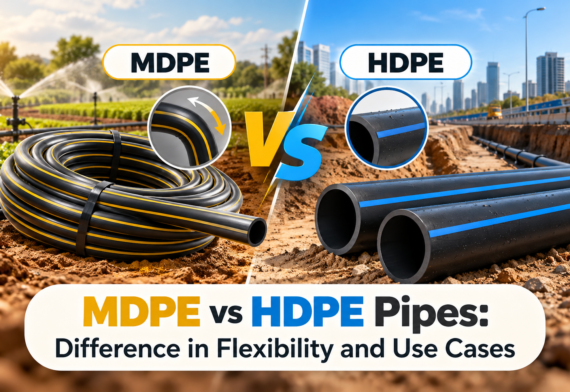
Other polyethylene products have different purposes. sprinkler pipe in india is designed for irrigation applications, while mdpe pipe in india refers to medium-density polyethylene piping used in specific service conditions. plb duct pipes in india are generally used for telecom cable protection, and SWC Hdpe Pipes in india refers to single-wall corrugated products.
These products should not be substituted for stormwater drainage pipes without confirming their intended application and technical suitability.
E-E-A-T: Why Engineering Verification Matters
A reliable drainage solution requires more than choosing a material based on advertised benefits. Project teams should verify manufacturer credentials, applicable product standards, test documentation, installation guidelines, and previous project experience.
For large infrastructure projects, hydraulic calculations and structural checks should be completed by qualified professionals. Proper bedding, backfilling, joint inspection, and commissioning tests are equally important for long-term performance.
Frequently Asked Questions
1. Why are DWC HDPE pipes used in stormwater drainage?
They offer lightweight handling, corrosion resistance, and a smooth internal surface that supports efficient water movement when correctly designed and installed.
2. Are DWC pipes better than concrete pipes?
They can offer advantages in transportation, handling, and installation. However, concrete may remain suitable for projects with particular structural or loading requirements.
3. Can DWC pipes handle heavy traffic loads?
They can be used under traffic-loaded areas when the pipe’s ring stiffness, burial depth, soil support, and installation design meet the project’s requirements.
4. Do DWC pipes require regular maintenance?
Yes. Drainage systems should be inspected periodically for sediment accumulation, blockages, joint issues, and other obstructions.
5. What should be checked before purchasing DWC pipes?
Check diameter, ring stiffness, material properties, applicable standards, test reports, jointing arrangements, and manufacturer installation guidance.
Conclusion
DWC HDPE pipes are becoming an important option in modern stormwater drainage because of their handling advantages, corrosion resistance, and smooth internal surface. While concrete pipes remain valuable for specific structural applications, DWC systems can provide an efficient alternative when supported by proper hydraulic design, structural calculations, and quality installation.