-
Keshav Kripa Polyplast
- October 18, 2026
- No Comments
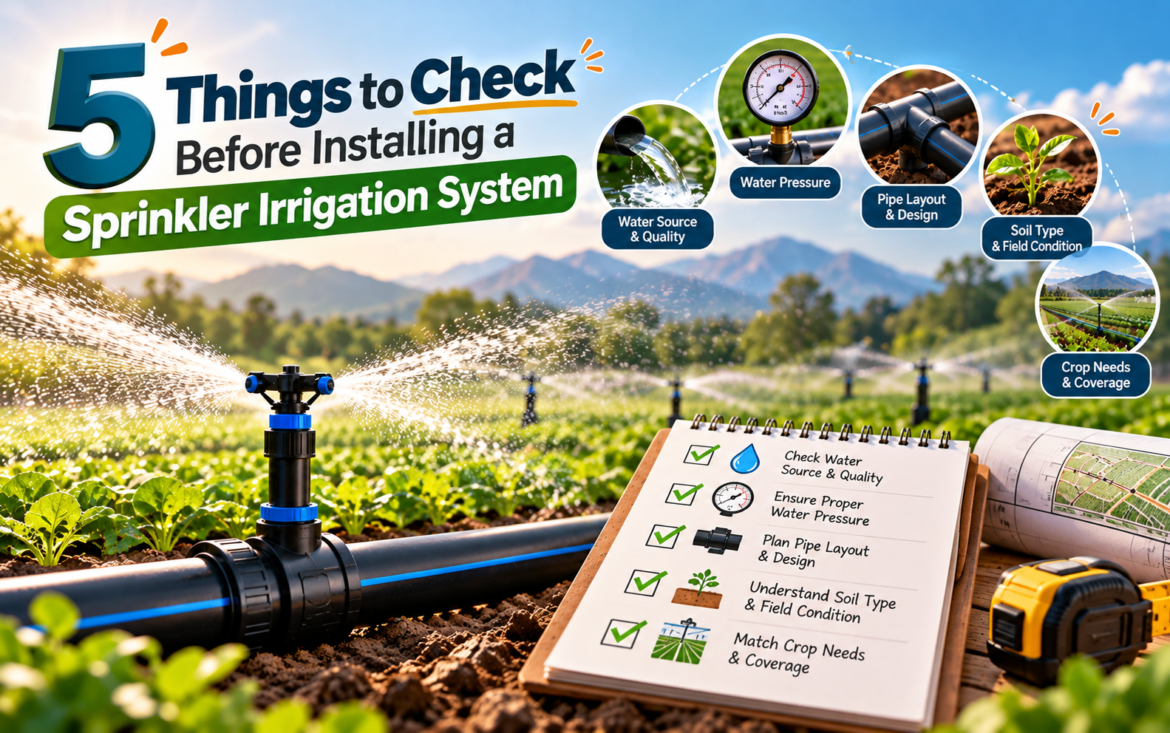
Author’s Note: Installing a sprinkler irrigation system requires proper planning to ensure efficient water distribution, healthy crop growth, and long-term reliability. This guide covers five essential checks for farmers, agricultural contractors, and irrigation planners. Actual system requirements depend on crop type, soil conditions, water availability, and local climate. For accurate design, consult an irrigation professional and follow the equipment manufacturer’s recommendations.
Table of Contents
- Assess Water Supply and Pressure
- Choose the Right Pipes and Sprinklers
- Plan the Layout and Spacing
- Check Filtration, Installation, and Maintenance
- Frequently Asked Questions
1. Assess Water Supply and Pressure
Before purchasing irrigation equipment, evaluate the water source, available flow rate, and operating pressure. A system may contain high-quality sprinklers but still perform poorly if the water supply cannot meet its requirements.
Check whether the source is a borewell, farm pond, canal, or storage tank. Determine the available flow rate and measure pressure under operating conditions. These measurements help establish how many sprinklers can operate simultaneously without reducing irrigation performance.
Water pressure is particularly important because insufficient pressure may result in weak spray patterns and uneven coverage. Excessive pressure can produce fine droplets, increase evaporation losses, and place unnecessary stress on fittings.
Match Irrigation Requirements to Your Crops
Different crops require different irrigation schedules and application rates. Vegetables, orchards, cereals, and other field crops may need different sprinkler types and spacing.
Consider soil characteristics as well. Sandy soils generally absorb water faster than heavy clay soils, so application rates should be matched to the soil’s infiltration capacity. This helps reduce runoff, waterlogging, and water wastage.
2. Choose the Right Pipes and Sprinklers
Selecting suitable pipes and sprinkler heads is essential for maintaining consistent water delivery. The pipe material, diameter, pressure rating, and joint quality should match the system design.
Select Pipes Based on Pressure and Durability
For agricultural irrigation, polyethylene piping is often considered because it is lightweight, corrosion-resistant, and suitable for many underground and above-ground installations when correctly specified. Buyers comparing sprinkler pipe in india should examine the product’s pressure rating, dimensions, UV resistance where relevant, and compatibility with connectors and valves.
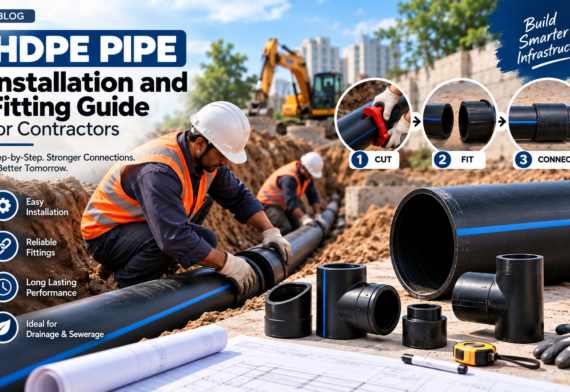
HDPE pipes can be suitable for mainlines and distribution networks when the material grade and design meet project requirements. When sourcing hdpe pipe in India, check the technical datasheet and confirm that the pipe is intended for the required operating pressure.
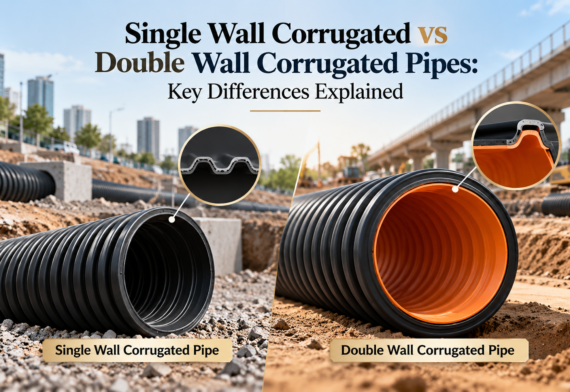
Not every polyethylene pipe is designed for irrigation. Products such as dwc pipe in India, which are generally used for drainage or cable-protection applications, should not be substituted for pressure-rated irrigation pipes unless the manufacturer explicitly approves the intended use.
Choose Suitable Sprinkler Heads
Sprinkler selection depends on crop height, field size, wind conditions, required application rate, and water pressure. Impact sprinklers may be suitable for some open-field crops, while other sprinkler types may provide better coverage for specific layouts.
Check the manufacturer’s recommended operating pressure, flow rate, spray radius, and spacing. Choosing equipment using these specifications helps prevent dry patches and excessive overlap.
3. Plan the Layout and Spacing
A well-planned layout improves water distribution and reduces operational problems. Before installation, prepare a field plan showing the water source, mainline, sub-mainlines, lateral pipes, valves, and sprinkler locations.
Account for Field Shape and Elevation
Slopes and changes in elevation can affect pressure across the system. Higher areas may receive less pressure, while lower areas can experience greater pressure. A suitable design may require pressure regulators, separate irrigation zones, or different pipe dimensions.
Sprinkler spacing should follow the manufacturer’s coverage recommendations and account for wind. In many systems, overlapping spray patterns help maintain uniform distribution, but the appropriate overlap depends on sprinkler performance and site conditions.
A qualified irrigation designer can calculate pipe diameters and pressure losses to help ensure that the sprinklers operate within their recommended range.
4. Check Filtration, Installation, and Maintenance
Inspect Components Before Commissioning
Before installation, inspect pipes, joints, valves, filters, connectors, and sprinkler heads for visible damage. Ensure that the system is assembled according to the manufacturer’s instructions and that all joints are properly secured.
Filtration is important when water contains sand, organic matter, or other particles that could block sprinkler nozzles. The filter type and mesh size should be selected according to the equipment manufacturer’s requirements and the quality of the water source.
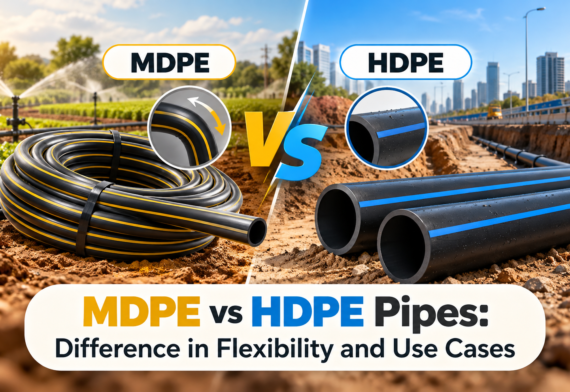
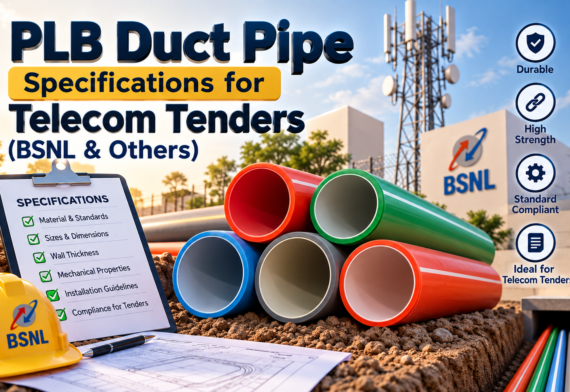
Buyers working with hdpe pipe manufacturers should request product specifications, relevant test reports, and installation guidance. For specialised infrastructure, mdpe pipe in india may refer to products intended for different operating conditions, while plb duct pipes in india and SWC Hdpe Pipes in india are associated with cable-protection applications rather than ordinary pressurised irrigation.
Test the System Before Regular Use
Flush the pipelines before commissioning, check for leaks, and operate each irrigation zone to verify pressure and sprinkler coverage. Measure distribution in different parts of the field and adjust spacing, pressure, or operating time where necessary.
Regularly clean filters, inspect nozzles, repair leaks, and monitor pressure. These simple steps help maintain performance and reduce water and energy losses over time.
Frequently Asked Questions
1. What should be checked before installing a sprinkler irrigation system?
Check water availability, flow rate, operating pressure, pipe specifications, sprinkler selection, field layout, filtration, and maintenance requirements.
2. Which pipe is suitable for sprinkler irrigation?
A pressure-rated irrigation pipe compatible with the system design is essential. The appropriate material and diameter depend on operating pressure, flow rate, installation conditions, and manufacturer specifications.
3. Why is water pressure important in sprinkler irrigation?
Pressure affects spray distance, droplet formation, and distribution uniformity. Incorrect pressure can cause poor coverage or unnecessary water loss.
4. Is filtration necessary for sprinkler systems?
Filtration is recommended when suspended particles could block nozzles or damage components. The required filtration level depends on water quality and equipment specifications.
5. How can farmers improve sprinkler irrigation efficiency?
Use a correctly designed layout, maintain suitable pressure, select compatible sprinklers, repair leaks, clean filters, and schedule irrigation according to crop and soil requirements.