-
dazemoonmarketing
- November 2, 2026
- No Comments
Author’s Note: Choosing between HDPE and PVC pipes is an important decision for water supply, drainage, irrigation, and industrial infrastructure projects. Both materials offer durability and practical advantages, but their performance differs depending on pressure, installation conditions, temperature, and maintenance. This guide explains their expected service life and helps contractors, engineers, and buyers make an informed decision. Always verify product specifications and applicable standards before purchasing.
Table of Contents
- Understanding HDPE and PVC Pipes
- Durability and Expected Service Life
- Performance Differences in Practical Applications
- How to Choose the Right Pipe
- Frequently Asked Questions
Understanding HDPE and PVC Pipes
HDPE stands for High-Density Polyethylene, a thermoplastic material known for its flexibility, impact resistance, and corrosion resistance. HDPE pipes are widely used in water distribution, irrigation, industrial pipelines, and underground infrastructure.
PVC, or Polyvinyl Chloride, is another widely used thermoplastic piping material. PVC pipes are generally more rigid and lightweight, making them suitable for water supply, drainage, plumbing, and other applications where their pressure and temperature ratings meet the project requirements.
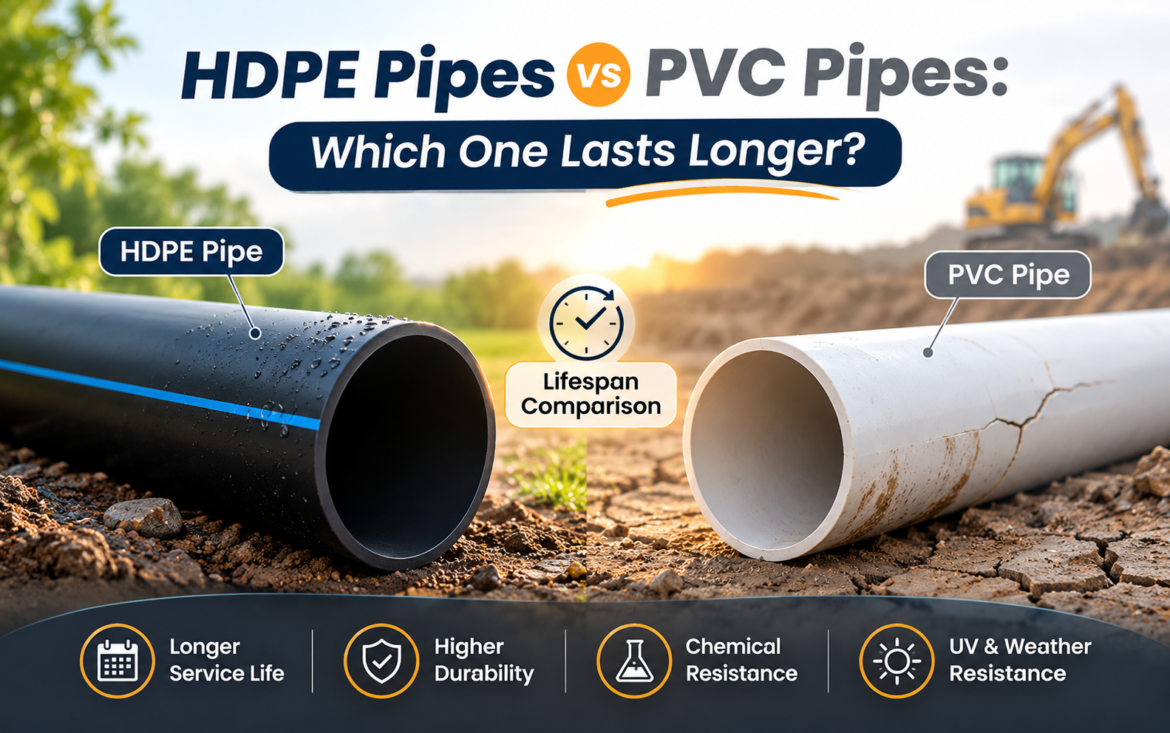
The biggest difference is their physical behaviour. HDPE can accommodate certain ground movements and bending without becoming brittle under suitable conditions. PVC maintains its shape more rigidly and can provide excellent long-term performance when correctly installed and protected from excessive impact.
Why Material Selection Matters
A pipe’s lifespan is not determined by material alone. Its pressure rating, wall thickness, manufacturing quality, installation method, operating temperature, soil conditions, and maintenance all influence how long it performs reliably.
Durability and Expected Service Life
HDPE Pipe Durability
HDPE pipes are valued for their resistance to corrosion, chemicals, and many environmental conditions. Unlike metallic pipes, they do not rust, which makes them useful for underground water distribution systems.
Their flexibility helps them accommodate certain ground movements and reduces the risk of damage caused by minor settlement. Properly joined HDPE pipelines can also create strong, leak-resistant connections through suitable fusion techniques.
Many engineered HDPE pressure systems are designed for a service life of approximately 50 years or more under specified operating conditions. However, this is a design expectation, not a guarantee for every installation. Actual life depends on material grade, pressure, temperature, installation, and operating conditions.
PVC Pipe Durability
PVC pipes also provide excellent corrosion resistance and can deliver a long service life in suitable applications. They are commonly used in water supply, drainage, and building plumbing systems.
Their rigid structure helps maintain alignment, but they may be more vulnerable to impact damage, particularly during handling, transportation, or installation in challenging conditions. Correct bedding, jointing, and protection are therefore important for underground PVC pipelines.
When installed according to the manufacturer’s recommendations and operated within their rated limits, PVC systems can also provide decades of dependable service.
Performance Differences in Practical Applications
Flexibility, Jointing, and Maintenance
HDPE pipes are generally more flexible than PVC pipes. This can make them useful for routes with curves or installations where ground movement is a consideration. Heat fusion can create continuous joints when performed using approved equipment and procedures.
PVC pipes are usually connected through solvent-cement joints, elastomeric ring joints, or other approved systems, depending on the product. Installation is often straightforward, but joint preparation and alignment must be handled correctly.
For buyers researching hdpe pipe in India, it is important to compare the pipe’s PE grade, SDR, pressure rating, and applicable standard instead of choosing based only on material type.
Suitability for Different Applications
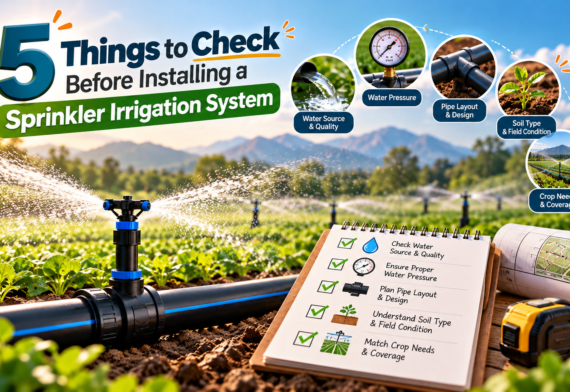
HDPE is commonly selected for water supply, industrial fluid transportation, and irrigation networks. Products such as sprinkler pipe in india are designed for agricultural irrigation and must match the required operating pressure and flow conditions.
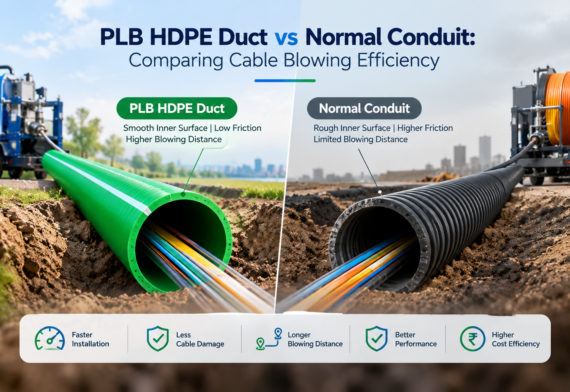
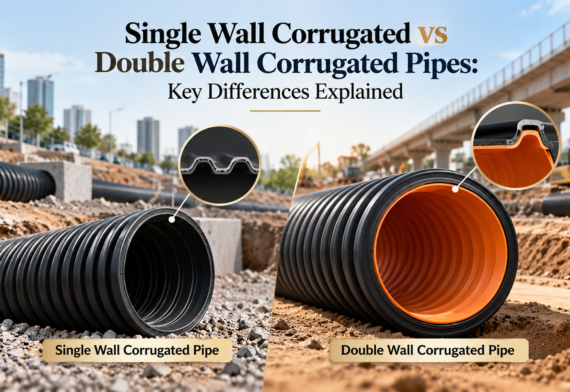
Specialised polyethylene products serve different purposes. dwc pipe in India generally refers to double-wall corrugated pipes used for specified drainage or cable-protection applications. plb duct pipes in india are designed for telecom cable protection, while SWC Hdpe Pipes in india refers to single-wall corrugated products.
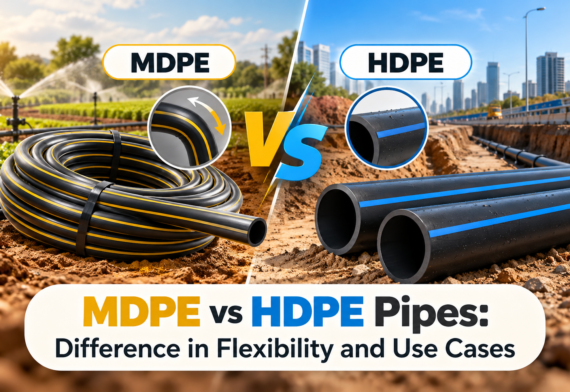
Similarly, mdpe pipe in india relates to medium-density polyethylene piping designed for particular applications. These products should not be treated as interchangeable with ordinary pressure water pipes.
How to Choose the Right Pipe
Evaluate Project Requirements and Product Quality
Before selecting a pipe, identify its intended application, operating pressure, fluid type, installation environment, and expected service conditions.
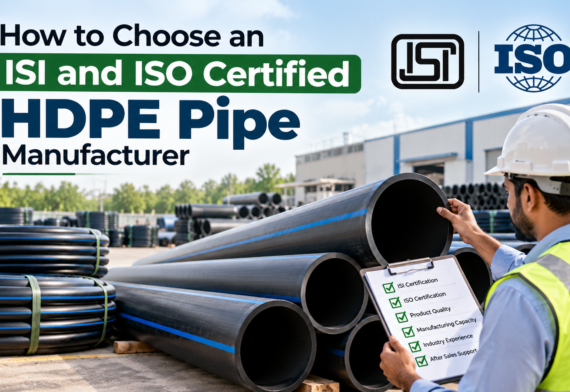
Request technical datasheets, relevant test reports, dimensional specifications, and applicable certification documents. Reputable hdpe pipe manufacturers should be able to explain the material grade, manufacturing standards, quality-control procedures, and recommended installation methods.
Also consider the availability of compatible fittings, joining equipment, technical support, and replacement components. For critical infrastructure, consult a qualified engineer to confirm that the selected material and pressure class meet the project design.
Final Verdict: Which Pipe Lasts Longer?
Both HDPE and PVC pipes can last for several decades when correctly specified, manufactured, installed, and maintained. HDPE may offer advantages where flexibility, impact resistance, and fusion-jointed connections are important. PVC can be an excellent choice for rigid water supply and drainage systems where its performance characteristics suit the application.
The better option is the one that meets the project’s technical requirements and provides reliable performance throughout its intended service life.
Frequently Asked Questions
1. Which lasts longer, HDPE or PVC pipes?
Both can provide a long service life, often several decades. Actual lifespan depends on pressure, temperature, material quality, installation, and maintenance.
2. Are HDPE pipes more flexible than PVC pipes?
Yes. HDPE pipes are generally more flexible and can accommodate certain ground movements better than rigid PVC pipes.
3. Are PVC pipes suitable for underground water supply?
Yes. Properly rated PVC pipes are widely used for underground water supply when installed according to the relevant specifications.
4. Do HDPE pipes require special jointing equipment?
Many HDPE pressure systems use butt fusion or electrofusion, which require suitable equipment and trained operators. Other approved mechanical connections may also be used.
5. Which pipe is better for industrial applications?
The choice depends on the fluid, operating pressure, temperature, chemical compatibility, and project requirements. Both materials can be suitable for specific industrial applications.