-
Keshav Kripa Polyplast
- October 5, 2026
- No Comments
Author’s Note: Corrugated pipes are widely used for cable protection, drainage, electrical infrastructure, and other underground applications. However, choosing between Single Wall Corrugated (SWC) and Double Wall Corrugated (DWC) pipes requires understanding their construction, strength, installation requirements, and intended application. Specifications can vary by manufacturer and project, so contractors should always verify the applicable technical standard and project requirements before selection.
Table of Contents
- What Are Single Wall and Double Wall Corrugated Pipes?
- Key Differences Between SWC and DWC Pipes
- Applications, Installation, and Selection
- Quality and Supplier Considerations
- Frequently Asked Questions
What Are Single Wall and Double Wall Corrugated Pipes?
Understanding Single Wall Corrugated Pipes
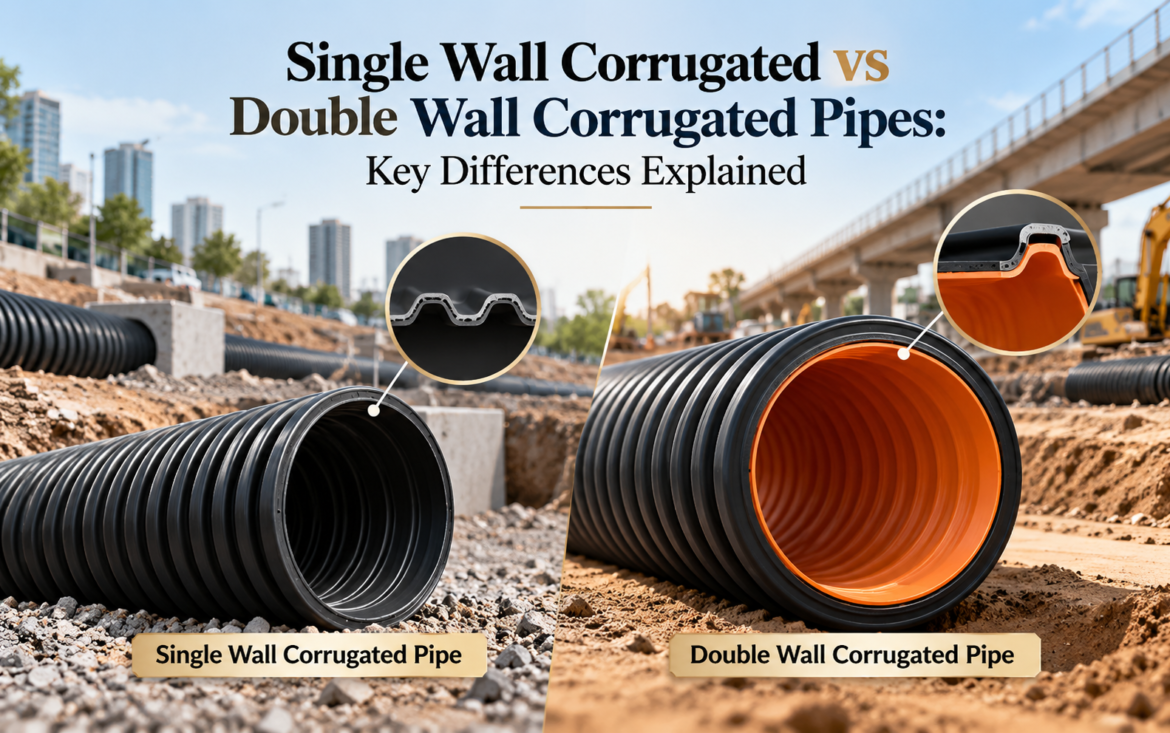
Single Wall Corrugated pipes have a corrugated structure throughout their wall. The profile provides flexibility while maintaining a lightweight construction, making these pipes suitable for applications where moderate mechanical protection and easy installation are required.
The corrugated design allows the pipe to bend around changes in alignment and makes transportation and handling relatively convenient. SWC Hdpe Pipes in india are commonly considered for cable protection and other applications where flexibility and economical installation are important.
Understanding Double Wall Corrugated Pipes
Double Wall Corrugated pipes have two distinct layers: a corrugated outer wall and a relatively smooth inner wall. This construction combines external structural strength with a smoother internal passage.
The smooth inner surface can help with cable installation and material flow, depending on the application. The outer corrugated profile provides additional resistance against external loads compared with many lightweight single-wall designs.
Key Differences Between SWC and DWC Pipes
Construction and Structural Performance
The most obvious difference is the wall construction. SWC pipes generally use a single corrugated wall, while DWC pipes combine a corrugated exterior with a smoother inner layer.
This difference affects performance. DWC pipes are often preferred where greater resistance to external loads and improved internal passage characteristics are required. SWC pipes can be advantageous when flexibility, lightweight handling, and cost-effective installation are the primary considerations.
| Feature | SWC Pipe | DWC Pipe |
|---|---|---|
| Wall structure | Single corrugated wall | Corrugated outer + smooth inner wall |
| Flexibility | Generally high | Moderate to high |
| Weight | Relatively lightweight | Generally heavier |
| Internal surface | Corrugated | Smooth |
| External protection | Suitable for moderate requirements | Better suited to higher-load applications |
| Typical use | Cable protection and light infrastructure | Underground drainage and cable protection |
Installation and Handling
Installation conditions can strongly influence the choice. SWC products can be easier to handle because of their lightweight construction and flexibility. DWC pipes may require more attention to bedding, alignment, jointing, and installation depth depending on the project.
For underground projects, contractors should evaluate soil conditions, traffic loading, burial depth, groundwater, and expected external pressure before selecting a pipe system.
Applications, Installation, and Selection
Where SWC Pipes Are Suitable
SWC pipes can be useful for electrical cable protection, low-to-moderate load underground installations, and applications where flexibility is valuable.
They may also be considered where the installation route contains bends or where transportation and manual handling need to remain simple.
Where DWC Pipes Are More Appropriate
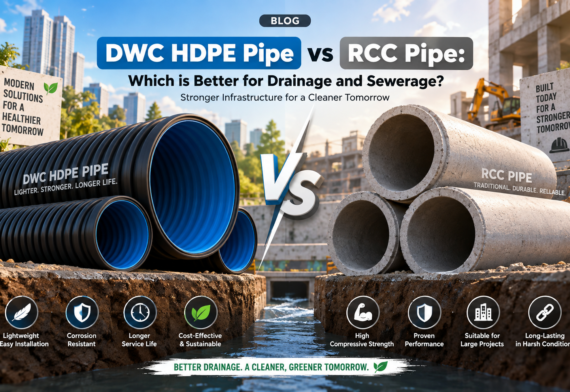
DWC pipes are frequently selected for applications that require stronger protection and a smoother internal pathway. They can be suitable for underground drainage, sewerage, stormwater management, and certain cable-protection systems.
When comparing dwc pipe in India options, buyers should examine diameter, ring stiffness, material properties, jointing method, and the relevant product standard instead of comparing price alone.
Quality and Supplier Considerations
Material and Technical Documentation
Both SWC and DWC pipes should be manufactured from appropriate polymer materials and should meet the technical requirements established for their intended application.
Buyers should request product datasheets, dimensional information, test reports, applicable certifications, and installation recommendations. Reliable hdpe pipe manufacturers should be able to explain how their products meet the specified technical requirements.
Selecting the Right Product
The correct choice depends on the project’s actual requirements rather than simply choosing the stronger or cheaper product.
For example, hdpe pipe in India may refer to products used across water supply, drainage, cable protection, irrigation, and industrial infrastructure. These applications require different pipe designs and performance characteristics.
Likewise, plb duct pipes in india are designed specifically for telecom cable applications and should not automatically be treated as alternatives to SWC or DWC products.
Other products such as sprinkler pipe in india and mdpe pipe in india are also designed for specific applications and operating conditions. Product selection should therefore be based on engineering requirements, applicable standards, installation environment, and manufacturer recommendations.
E-E-A-T Considerations for Project Selection
Contractors and procurement teams should verify the manufacturer’s technical credentials, quality-control process, test documentation, manufacturing consistency, and previous project experience.
For critical infrastructure, consulting the project engineer or qualified technical professional is recommended before finalising pipe specifications. Checking the latest applicable standards and project drawings also helps prevent incorrect product selection.
Final Takeaway
SWC and DWC pipes are not direct substitutes in every application. SWC generally offers flexibility and lightweight handling, while DWC provides a combination of a strong corrugated exterior and smoother internal surface.
The best choice depends on loading conditions, installation environment, required protection, internal passage requirements, project standards, and overall lifecycle considerations.
Frequently Asked Questions
What is the main difference between SWC and DWC pipes?
SWC pipes have a single corrugated wall, while DWC pipes generally have a corrugated outer wall and a smooth inner wall.
Which pipe is stronger, SWC or DWC?
DWC pipes generally provide better resistance to external loads because of their two-layer construction, but actual performance depends on the product design and applicable specification.
Are SWC pipes suitable for cable protection?
Yes. SWC pipes can be used for cable protection where the project’s mechanical protection and installation requirements are compatible with the pipe’s specifications.
Why does DWC have a smooth inner wall?
The smooth inner surface can make cable installation or material flow easier and can reduce resistance compared with a fully corrugated internal surface.
How should contractors choose between SWC and DWC?
They should consider installation depth, external loading, soil conditions, flexibility requirements, internal clearance, applicable standards, and manufacturer specifications before making a decision.