-
Keshav Kripa Polyplast
- November 25, 2026
- No Comments
Author’s Note: Selecting the right welding method is essential for achieving reliable, leak-resistant HDPE pipe joints. This guide explains the differences between butt fusion and electrofusion, their applications, advantages, and the key factors engineers and contractors should consider before making a decision.
Table of Contents
- Understanding Butt Fusion and Electrofusion
- Key Differences Between the Two Welding Methods
- How to Choose the Right Welding Method
- Frequently Asked Questions
Understanding Butt Fusion and Electrofusion
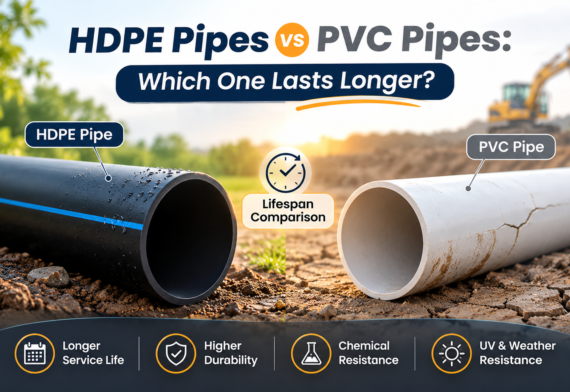
HDPE pipes are widely used in water supply, irrigation, gas distribution, industrial applications, and underground infrastructure because of their flexibility, durability, and corrosion resistance. However, the performance of an HDPE pipeline depends not only on the pipe material but also on the quality of its joints.
Two commonly used joining techniques are butt fusion welding and electrofusion welding. Both methods use heat to create a strong connection between compatible thermoplastic components, but they differ in equipment, installation process, and suitability for specific site conditions.
What Is Butt Fusion Welding?
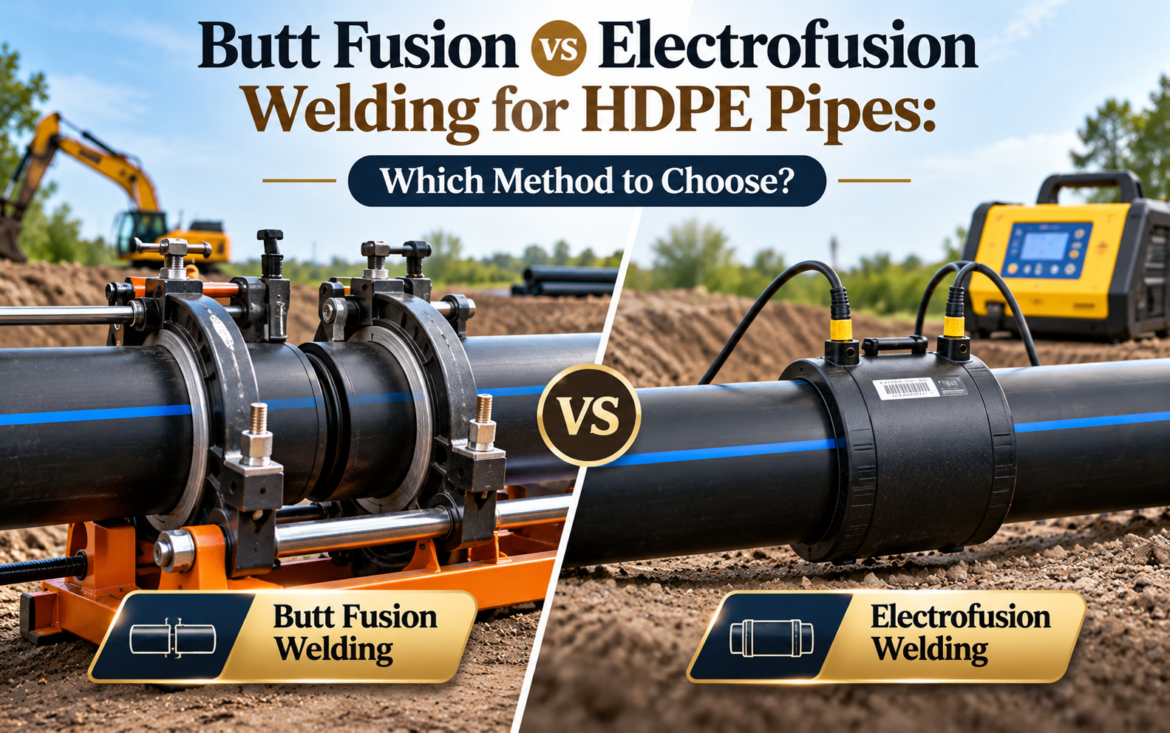
Butt fusion is a thermal joining process in which two compatible HDPE pipe ends are heated using a controlled heating plate. Once the pipe ends reach the required fusion temperature, the plate is removed and the ends are pressed together under controlled pressure.
After cooling, the joint forms a continuous connection between the pipe sections.
This method is generally suitable for straight pipeline sections, long-distance installations, and projects where sufficient working space is available. It is frequently used with products supplied by hdpe pipe manufacturers for water distribution, industrial pipelines, and infrastructure networks.
Butt fusion requires properly aligned pipe ends, clean surfaces, suitable equipment, and trained operators. Incorrect temperature, pressure, alignment, or cooling time can weaken the joint.
What Is Electrofusion Welding?
Electrofusion uses specially designed fittings containing an embedded electrical heating element. When an approved electrofusion control unit supplies electrical energy, the element heats the fitting and the surrounding pipe surface, creating a fused connection.
Electrofusion is particularly useful in confined spaces, repair work, complex pipeline layouts, and locations where moving or aligning long pipe sections is difficult.
The process requires compatible fittings, accurate pipe preparation, proper scraping of the fusion area, and adherence to the fitting manufacturer’s fusion parameters.
Key Differences Between the Two Welding Methods
Butt fusion and electrofusion can both produce dependable joints when performed correctly. The main difference lies in how heat is applied and how the pipe components are prepared and joined.
Equipment and Installation Requirements
Butt fusion typically requires a fusion machine with clamps, a heating plate, a facing tool, and a suitable power source. It is often efficient for joining long pipe sections in open working areas.
Electrofusion requires compatible electrofusion fittings, a control unit, and tools for preparing the pipe surface. Since the fitting generates heat internally, it can be more practical for repairs and restricted locations.
For projects involving hdpe pipe in India, the choice should consider pipeline diameter, site accessibility, installation conditions, and the technical specifications approved for the project.
Joint Quality and Application
Both methods can provide strong, leak-resistant joints when the pipe and fitting materials are compatible and the welding procedure is followed correctly.
Butt fusion is often preferred for long, continuous pipelines where multiple joints can be made efficiently. Electrofusion offers greater flexibility for connecting pipe sections in tight spaces or making localized repairs.
Applications may include water supply networks, agricultural systems using sprinkler pipe in india, and distribution pipelines using mdpe pipe in india, provided the selected joining method is approved for the specific pipe material and application.
How to Choose the Right Welding Method
The best welding method depends on project requirements rather than simply the cost of equipment or fittings.
Consider Site Conditions and Project Scale
For large projects with long straight pipe runs and adequate working space, butt fusion may offer better installation efficiency. For repairs, connections near existing infrastructure, or difficult-to-access locations, electrofusion may be more convenient.
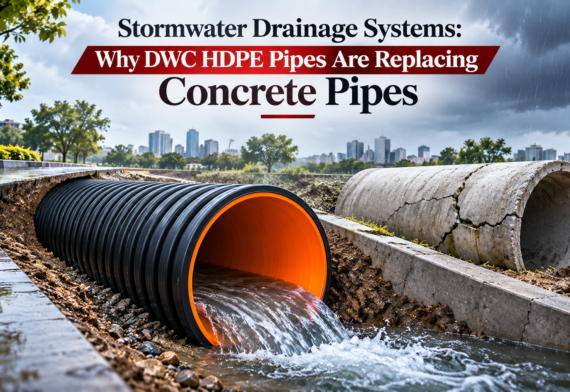
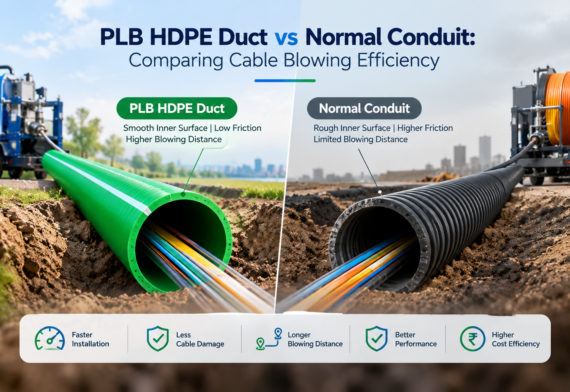
Specialized pipeline applications, including dwc pipe in India, plb duct pipes in india, and SWC Hdpe Pipes in india, may have different jointing requirements depending on their construction and intended use. Always confirm whether the product is designed for fusion welding before selecting a method.
Verify Technical Specifications and Installer Competence
Before welding, check the pipe’s material grade, outside diameter, wall thickness, SDR, and manufacturer’s joining instructions. Confirm that the fitting and pipe are compatible and that the welding equipment is calibrated and suitable for the application.
A reliable quality-control process should include:
- Checking pipe and fitting identification and compatibility
- Inspecting pipe ends and fusion surfaces for contamination or damage
- Following the approved welding procedure and machine parameters
- Allowing the joint to cool for the specified period without disturbance
- Recording welding parameters and inspecting completed joints
For critical projects, welding should be carried out by trained personnel under the supervision of qualified technical staff. Maintain traceable records of equipment, operator details, joint identification, and inspection results.
These practices support E-E-A-T by emphasizing practical installation experience, technical expertise, verifiable product information, and documented quality assurance.
Frequently Asked Questions
1. Which is stronger, butt fusion or electrofusion?
Both methods can produce strong joints when performed correctly. Joint performance depends on material compatibility, preparation, equipment, and compliance with the approved welding procedure.
2. Is electrofusion suitable for pipe repairs?
Yes. Electrofusion is commonly used for repairs and connections where access is limited or pipe movement is difficult.
3. Is butt fusion more economical than electrofusion?
For long pipeline installations, butt fusion may be more economical because it can reduce the need for individual fittings. Electrofusion fittings may cost more but can offer practical advantages in restricted locations and repair work.
4. Can all HDPE pipes be joined using both methods?
No. The pipe and fitting must be compatible and specifically suitable for the selected joining process. Always follow the manufacturer’s technical instructions.
5. What is the most important factor in achieving a reliable HDPE joint?
Proper pipe preparation, correct welding parameters, trained operators, and adequate cooling time are essential for producing a dependable joint.