-
dazemoonmarketing
- September 21, 2026
- No Comments
Author’s Note:
This guide is intended for contractors, plumbers, site engineers, irrigation professionals, and project teams involved in HDPE pipeline installation. Proper installation is essential for achieving the expected performance and service life of a pipeline. Actual procedures vary according to pipe grade, diameter, SDR, application, joining method, site conditions, and applicable standards. Contractors should always follow the manufacturer’s installation manual and project-specific engineering specifications.
Table of Contents
- Understanding HDPE Pipes and Fittings
- HDPE Pipe Installation Process
- Joining Methods and Quality Checks
- Common Installation Mistakes to Avoid
- FAQs
Understanding HDPE Pipes and Fittings
HDPE, or High-Density Polyethylene, is widely used for water distribution, irrigation, industrial pipelines, utility networks, and other infrastructure applications. Its combination of flexibility, corrosion resistance, impact resistance, and relatively low weight makes it practical for many above-ground and underground installations.
Before beginning work, contractors should identify the pipe’s material grade, outside diameter, wall thickness, SDR, pressure rating, and intended application. For hdpe pipe in India, these specifications can vary significantly between pressure pipes, irrigation pipes, drainage systems, and other utility products.
Fittings are equally important. Depending on the system, contractors may use elbows, tees, reducers, couplers, flanges, valves, service saddles, and other compatible components. Every fitting should be suitable for the pipe material, dimensions, pressure requirements, and operating conditions.
The first step is therefore to review the project drawings, manufacturer’s technical datasheet, joining instructions, and applicable standards before taking pipes to the installation site.
HDPE Pipe Installation Process
A systematic installation process helps minimise leakage, deformation, joint failures, and unnecessary maintenance.
1. Site Preparation
Inspect the route before installation. Identify existing utilities, determine the required pipeline alignment, and prepare the trench or supporting structure according to the engineering design.
For underground pipelines, trench width and depth should provide sufficient working space while maintaining the required cover above the pipe. The trench bottom should be free from sharp objects, rocks, construction debris, and other materials that could damage the pipe.
2. Pipe Inspection and Handling
Inspect pipes before installation. Look for cuts, deep scratches, cracks, excessive deformation, or other visible defects.
HDPE pipes should be handled carefully using suitable lifting equipment. Dragging pipes across rough ground can damage their surface. Coiled pipes should also be unwound carefully according to the manufacturer’s recommendations.
3. Bedding and Alignment
For buried installations, suitable bedding material may be required depending on soil conditions and project design. The pipe should be properly supported along its intended alignment.
Avoid forcing the pipe into sharp bends. HDPE has flexibility, but the manufacturer’s minimum bending radius should always be respected.
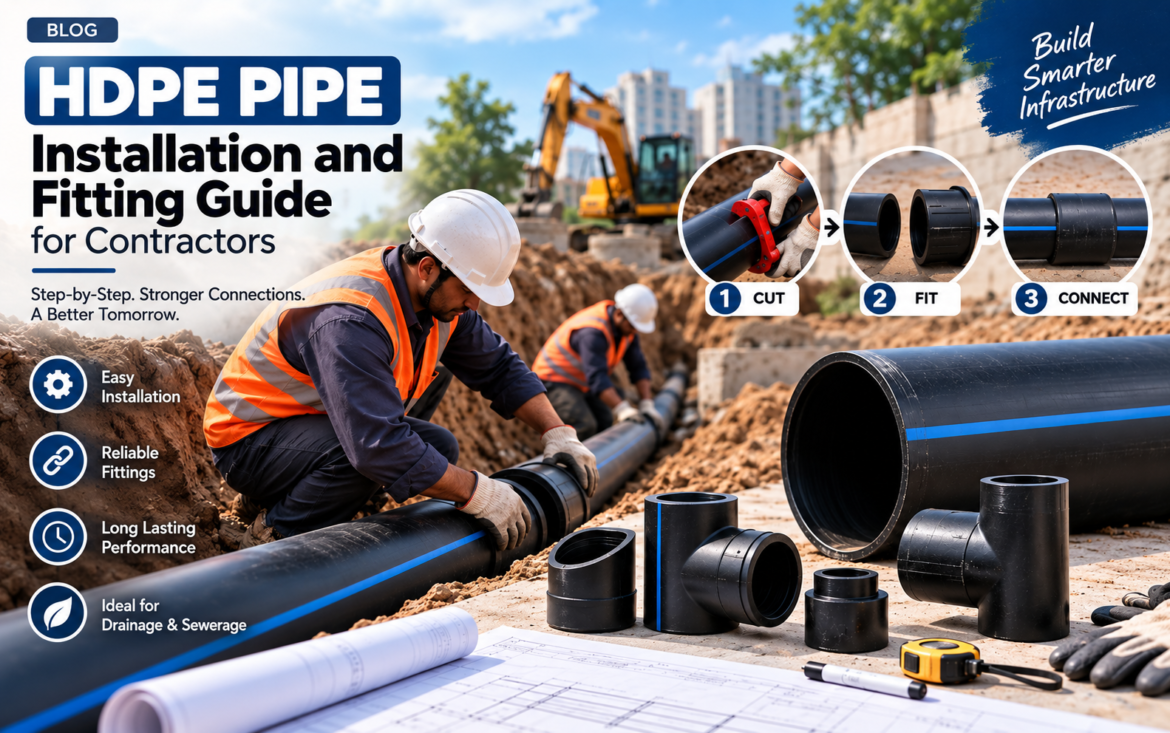
4. Connecting Pipes and Fittings
HDPE systems can be joined using methods such as butt fusion, electrofusion, mechanical fittings, or flange connections, depending on the application and pipe specification.
Butt fusion generally involves preparing and aligning the pipe ends, heating the surfaces with an approved fusion machine, and joining them under controlled pressure. Temperature, heating time, alignment, pressure, and cooling time should follow the manufacturer’s approved procedure.
Electrofusion uses specialised fittings containing embedded electrical heating elements. The pipe surface must be properly prepared, cleaned, aligned, and secured before the fusion cycle.
Mechanical fittings may be appropriate for certain installations where fusion is not practical. The fitting manufacturer’s instructions should be followed carefully.
Joining Methods and Quality Checks
Quality control is one of the most important parts of HDPE installation. A visually acceptable pipeline is not necessarily a correctly installed pipeline.
Contractors should verify:
- Correct pipe and fitting dimensions
- Proper pipe-end preparation
- Correct alignment
- Appropriate fusion equipment
- Proper heating and fusion parameters
- Adequate cooling time
- Joint inspection
- Pressure or leakage testing as specified
- Correct trench backfilling and compaction
For fusion projects, operators should be properly trained and equipment should be maintained and calibrated according to applicable requirements.
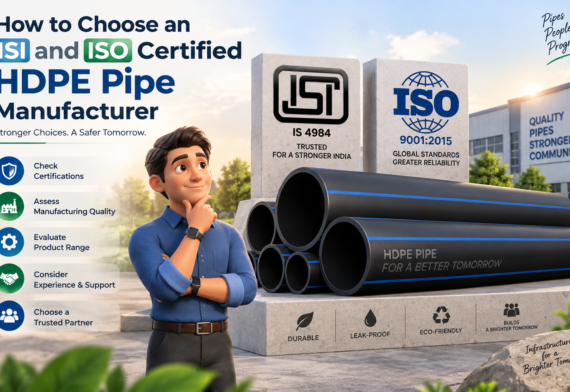
When selecting hdpe pipe manufacturers, contractors should consider not only product price but also technical documentation, dimensional consistency, testing procedures, product traceability, and technical support.
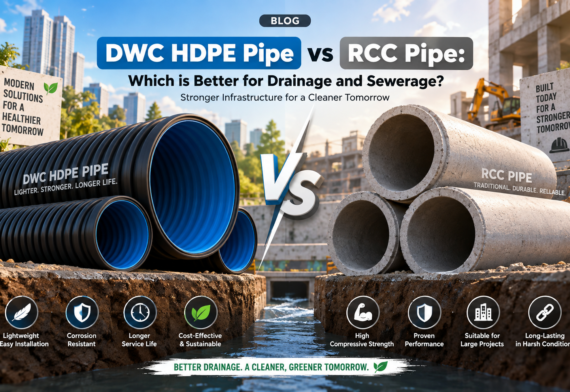
It is also important to use the correct pipe category for the intended project. dwc pipe in India generally refers to double-wall corrugated products used for applications such as drainage and cable protection rather than conventional pressurised water pipelines.
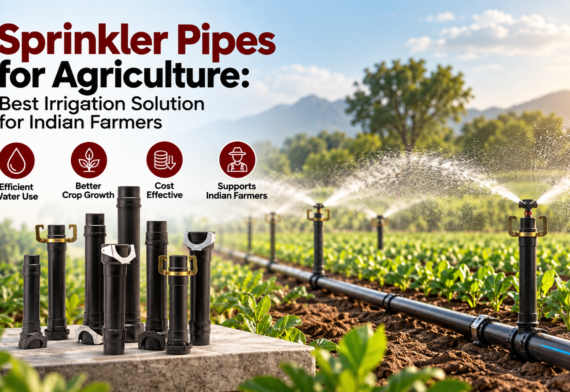
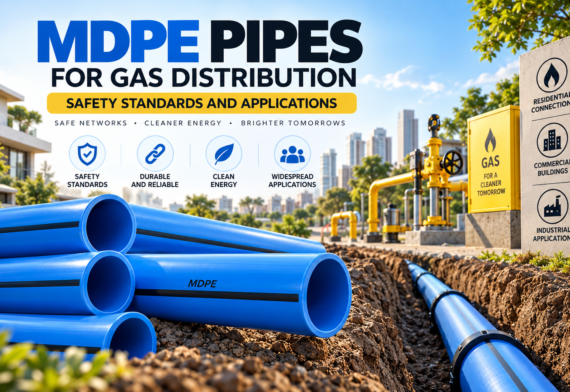
Likewise, sprinkler pipe in india is associated with agricultural irrigation systems, while mdpe pipe in india is a separate polyethylene product category used for specific applications. plb duct pipes in india are primarily associated with telecom and fibre-optic cable infrastructure, and SWC Hdpe Pipes in india can refer to structured-wall products designed for particular underground applications.
Using a product outside its intended application can result in performance and safety problems.
Common Installation Mistakes to Avoid
Several avoidable mistakes can affect HDPE pipeline performance.
One common issue is inadequate surface preparation before fusion. Contaminated, uneven, or improperly aligned pipe ends can compromise joint quality.
Another problem is insufficient trench preparation. Sharp stones, unsuitable bedding, or poor compaction can create localised stress on the pipe.
Contractors should also avoid exceeding recommended bending limits or pulling forces. Pipes should not be dragged unnecessarily across abrasive surfaces.
Backfilling should be performed according to the project specification. Poorly placed backfill can leave voids around the pipe or create uneven external loading.
Finally, pressure testing should not be skipped when it is required by the project specification. Testing provides an opportunity to identify leakage or installation problems before the pipeline becomes operational.
A well-installed HDPE pipeline depends on three elements: the correct product, qualified installation practices, and appropriate quality control. Contractors who follow the manufacturer’s instructions and project engineering requirements can significantly reduce installation-related problems.
FAQs
1. What is the most common HDPE pipe joining method?
Butt fusion is widely used for compatible HDPE pressure-pipe systems, although electrofusion, mechanical fittings, and flange connections may also be appropriate depending on the application.
2. Can HDPE pipes be installed underground?
Yes. HDPE is commonly installed underground for suitable applications. Trench preparation, bedding, alignment, cover, backfilling, and external loading must follow the project design.
3. How should HDPE pipes be handled on site?
Use suitable lifting and handling equipment, avoid dragging pipes over rough surfaces, and inspect them for damage before installation.
4. Why is pipe alignment important during fusion?
Incorrect alignment can create an uneven joint and may affect the structural integrity and flow characteristics of the pipeline.
5. How long should a fused HDPE joint cool?
Cooling time depends on pipe dimensions, fusion equipment, material specifications, and the manufacturer’s procedure. Contractors should follow the specified fusion cycle rather than using a general fixed time.
6. Is pressure testing necessary after HDPE installation?
Where required by the project specification or applicable standard, pressure testing should be performed before commissioning. The test procedure and pressure should be established by the responsible engineer or applicable standard.
7. What is the biggest installation mistake to avoid?
There is no single mistake applicable to every project, but inadequate joint preparation, incorrect fusion parameters, poor trench preparation, excessive bending, and improper backfilling are common causes of installation problems.