-
Keshav Kripa Polyplast
- September 8, 2026
- No Comments
Author’s Note:
This guide is written for infrastructure contractors, electrical engineers, telecom professionals, builders, project managers, and procurement teams who want to understand how structured-wall HDPE pipe systems can protect underground cables. The performance of any cable-protection system depends on the pipe design, material quality, installation conditions, soil characteristics, burial depth, external loads, and applicable project specifications. Always review the manufacturer’s technical documentation and relevant standards before selecting a product for a specific project.
Table of Contents
- What Are SWC HDPE Pipes?
- How SWC HDPE Pipes Protect Underground Cables
- Key Benefits and Applications
- Choosing the Right Pipe for Cable Protection
- FAQs
What Are SWC HDPE Pipes?
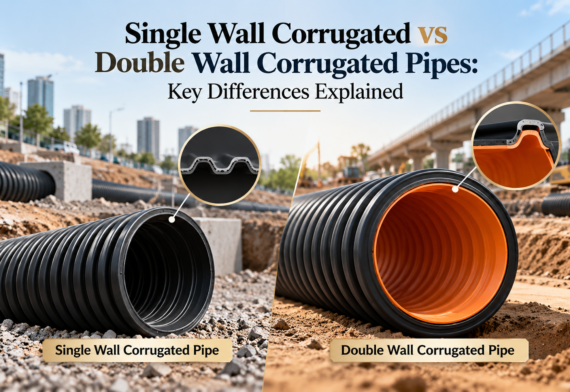
SWC generally refers to Structured Wall Corrugated pipe systems. These pipes are designed with a specialised wall structure that provides mechanical strength while helping maintain a practical weight for transportation and installation.
For underground cable infrastructure, the main purpose of a protective pipe is to create a secure pathway between the cable and the surrounding environment. Directly buried electrical or communication cables can be exposed to soil pressure, construction activity, moisture, accidental excavation, and other external risks. A properly selected pipe system provides an additional layer of protection.
SWC Hdpe Pipes in india are used in infrastructure applications where structured-wall construction and underground protection are important. However, buyers should always confirm the exact product design and intended application because structured-wall pipes can be manufactured for different purposes, including drainage, utility protection, and cable infrastructure.
HDPE is widely valued for its resistance to corrosion, impact performance, flexibility, and relatively lightweight construction. Unlike certain metallic materials, polyethylene does not rust when exposed to moisture in the surrounding soil.
The exact wall profile can vary between manufacturers. Therefore, engineers and contractors should review details such as internal diameter, external diameter, wall construction, stiffness, load-bearing requirements, jointing method, and installation recommendations before finalising a product.
How SWC HDPE Pipes Protect Underground Cables
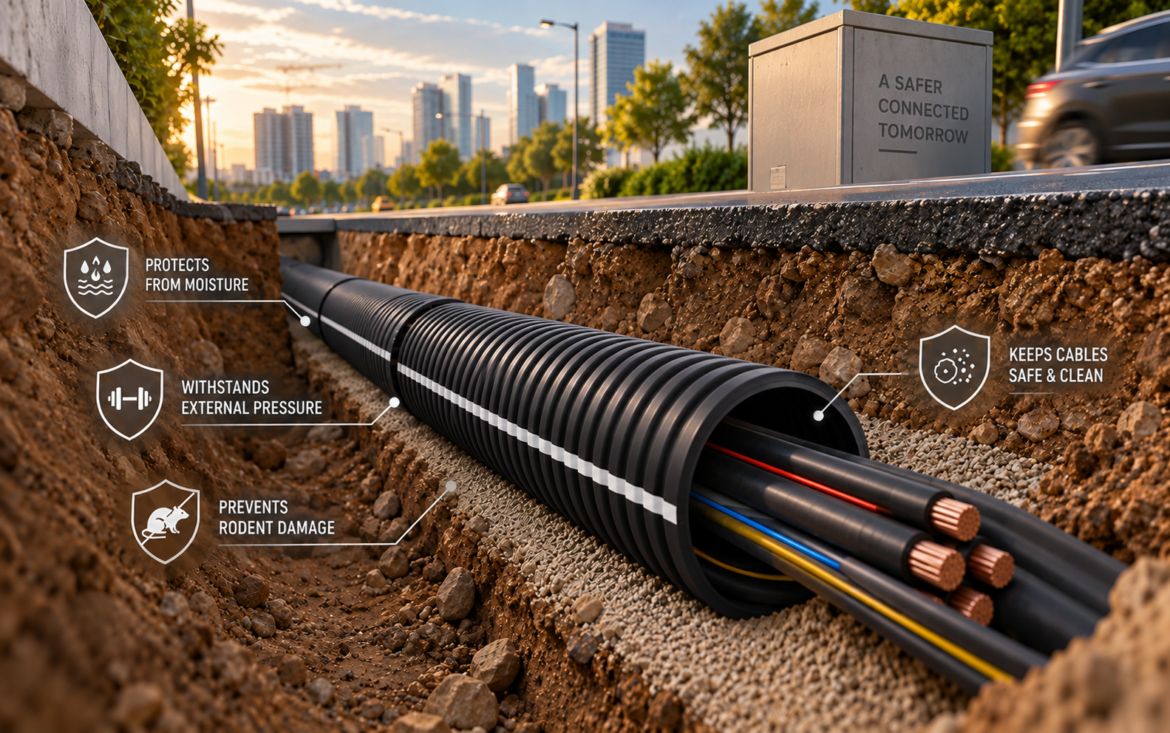
The protection offered by an SWC pipe system comes from creating a physical barrier around the cable route.
Protection Against External Loads:
Underground infrastructure can experience pressure from soil, vehicles, construction equipment, and surface activity. A correctly designed structured-wall pipe helps distribute external loads and reduces direct exposure of the cable to surrounding pressure.
Protection During Construction Activities:
Road repairs, landscaping, excavation, and new construction projects can create risks for buried utilities. Although no pipe can guarantee protection against every type of excavation damage, a properly installed protective duct makes the cable route more identifiable and provides an additional mechanical barrier.
Resistance to Moisture and Corrosion:
Underground conditions can contain moisture and chemicals that affect certain conventional materials. HDPE provides strong resistance to corrosion, making it suitable for many underground environments. Proper sealing and installation remain important because the overall cable system may have additional requirements for water protection.
A Controlled Cable Pathway:
Protective pipes help create an organised route for electrical, telecom, and communication cables. This can simplify maintenance and future cable replacement compared with situations where cables are directly buried without a dedicated duct pathway.
Reduced Environmental Exposure:
A cable installed inside a protective pipe has less direct contact with soil, stones, debris, and other materials that could potentially damage its outer surface during installation or throughout its operational life.
For projects involving hdpe pipe in India, it is important to understand that HDPE is a broad product category. Pressure pipes designed for water transportation and structured-wall pipes designed for underground utility protection may have completely different technical requirements.
Key Benefits and Applications
SWC HDPE pipe systems can offer several practical advantages for underground infrastructure projects.
Lightweight Installation:
Compared with many traditional pipe materials, HDPE products can be easier to transport and handle. This can help improve installation efficiency, particularly on large infrastructure projects.
Flexibility:
HDPE has natural flexibility that can be beneficial when working with changing terrain and certain ground movements. The installation must still follow the manufacturer’s recommended bending limits.
Long-Term Infrastructure Support:
A well-designed duct system can support future maintenance and network expansion. Depending on the project design, existing pathways may allow new cables to be installed without completely rebuilding the underground route.
Multiple Infrastructure Applications:
Structured-wall cable-protection systems may be used in electrical networks, telecom infrastructure, fibre-optic routes, highways, industrial facilities, railway projects, and urban utility development.
Other pipe categories should not automatically be substituted for structured-wall cable ducts. For example, dwc pipe in India may also be considered for underground utility and cable applications, but the final choice should depend on the required load performance, pipe construction, installation environment, and project specification.
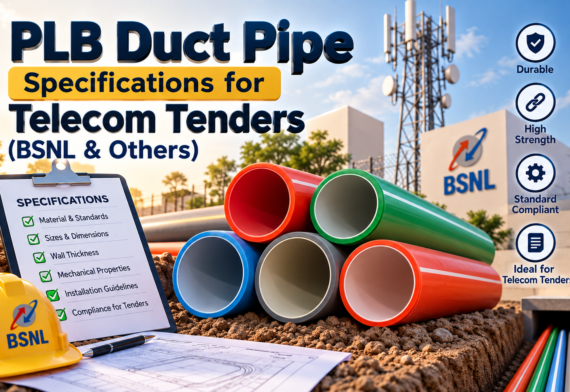
Similarly, plb duct pipes in india are specialised products commonly associated with fibre-optic cable installation, particularly where low-friction internal surfaces are important for cable pulling or blowing.
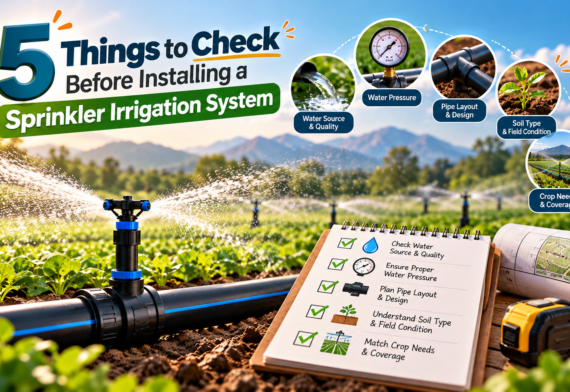
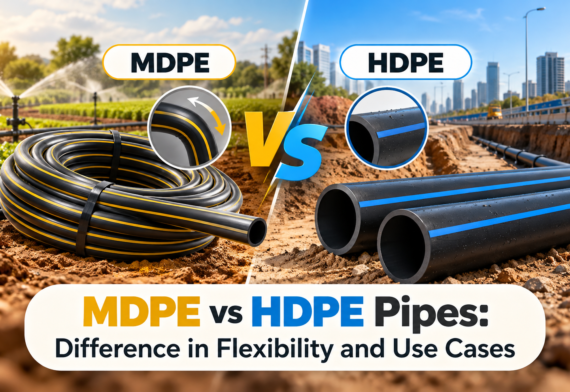
Products such as sprinkler pipe in india and mdpe pipe in india are designed for different applications and should be selected according to their intended service requirements rather than simply because they are polyethylene-based products.
Choosing the Right Pipe for Cable Protection
Selecting the right underground cable-protection pipe requires more than choosing a diameter. Project teams should first identify the type and size of cable, installation method, route length, burial depth, soil conditions, and expected external loading.
Important factors include:
- Required internal diameter for the cable
- Number of cables or future capacity requirements
- Burial depth
- Soil type and ground conditions
- Traffic and external loading
- Pipe stiffness and mechanical strength
- Jointing and connection system
- Cable pulling or blowing requirements
- Applicable project standards
- Manufacturer testing and technical documentation
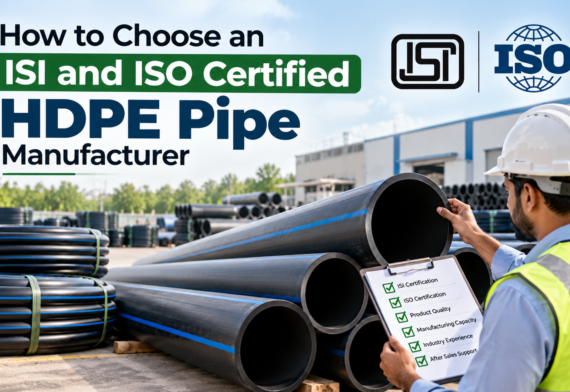
When comparing hdpe pipe manufacturers, buyers should evaluate manufacturing consistency, quality-control procedures, technical support, testing capability, product traceability, and the supplier’s ability to meet project specifications.
The lowest purchase price should not be the only deciding factor. Poorly specified or incorrectly installed ducting can create installation difficulties, increase maintenance costs, and potentially expose expensive underground cables to unnecessary risks.
For critical infrastructure projects, consulting the manufacturer’s technical team and qualified project engineers before procurement can help ensure that the selected system matches the actual operating environment.
FAQs
What are SWC HDPE pipes used for?
SWC HDPE pipe systems can be used for underground infrastructure applications, including utility and cable protection, depending on their specific design and technical specifications.
How do SWC pipes protect underground cables?
They create a physical barrier between the cable and the surrounding environment, helping reduce exposure to soil pressure, stones, debris, moisture, and certain external mechanical risks.
Are SWC HDPE pipes suitable for electrical cables?
They can be suitable when the pipe’s dimensions, mechanical properties, installation method, and project specifications are appropriate for the electrical cable system being installed.
Can SWC pipes be used for fibre-optic cables?
Depending on the design, they may provide mechanical protection for fibre routes. However, projects requiring specialised low-friction ducts for cable blowing should evaluate products specifically designed for fibre-optic installation.
What should I check before buying an underground cable-protection pipe?
Check the internal diameter, wall construction, load performance, burial requirements, jointing system, applicable standards, manufacturer documentation, and compatibility with the intended cable-installation method.
Are all HDPE pipes suitable for underground cable protection?
No. HDPE describes the material category, but different pipes are manufactured for water supply, irrigation, drainage, telecom, gas, and cable protection. The product should always be selected according to its intended application and technical requirements.